• I Wonder if it hurts to Live

    I measure every Grief I meet (561)

    Emily Dickinson

    I wonder if it hurts to live –


  • Phone Sex & Mental Health


    Not For The Faint Of Heart

    I’d often think about the guy in Santa Clara, who got raped when he was thirteen. The worst memories refuse to die.

    Twenty years later, that man paid me $1.99 a minute to listen to his stories, and I was never given an algorithm for that. He raped himself every day, having unprotected sex with strangers, and then paid me to hear him. I could not fix him, and that haunted me. I felt a heavy, lingering sadness afterwards, knowing that some pains are too deep to heal. I’m tough, or at least that’s what I’ve always been told, but moments like these make me question the true depth of my resilience.

    I was never abused riding a bus or walking around at night, not even in the dark streets of the Czech Republic in the snow. However, I did get surrounded by a bunch of boyish men on a train, on my way through Slovakia. They grouped me in my seat. Instinctively, my gaze shot to the three women near me. They each appeared so engrossed in what they were each reading—they didn’t seem to notice me. 

    A young man sat next to me and touched me—a poke to my shoulder. I said, ‘Go fuck yourself.’ It was the only time I’ve ever uttered that phrase and still been scared. That was a moment of resistance. Moments of violation and of standing up intermingle, shaping who I am now. I’m in an apartment complex. Dallas, technically. Could be anywhere, I don’t care. I have no key and nowhere to be. I want to see trees and my son’s smile. 

    If it’s not broken, break it. 

    Despite all this, I find some solace in remembering that I am still breathing and capable of finding moments of genuine connection, even with the weight of these memories. Sometimes, I take a walk in the park or sit quietly and listen to music that soothes me, letting the words flow over me like a soft embrace. When the darkness threatens to overwhelm, I think of my son’s laughter as a beacon of light guiding me through. Writing down my thoughts, pouring them onto paper, often helps me make sense of the chaos inside. These small acts remind me there is still beauty to be found, no matter how fractured my world seems.

    I sit here, quiet, feeling the ache in my chest pulse with the shadows moving across the wall. My breath is small, barely enough. I haven’t tried to die in a long time. Yet despite it all, there’s a small light that refuses to go out. I think about my son, the way his eyes light up with curiosity, and I hold onto that. It gives me a reason to breathe on days I find it hard. I wonder if there is still a place for me in this world. 

    I don’t care much about what I missed. I wish I could go back. I wish I weren’t sick. I wish I could see my son’s first Christmas again, with the dogs who are now dead. I want to cook in that kitchen. I want my garden. I wish I remembered my son’s twelfth birthday. I wish I remembered every second of January 7, same time each year.

    I remember the delivery room, how big his head was, how he ripped me apart as he pushed his way out of my body. I wish I had my hammock. I wish I could smell honeysuckle. I wish I were riding a snowboard for the first time. I wish I had broken my leg because I was brave enough for roller derby. Again. I wish I still had friends. I wish I still snuggled my dogs: Fritz, Greta, and Harriet. I want my garden. 

    I wish I were remembered. 

    I wish I remembered more than this 10-story apartment building, this room with a bed. My entire life, I wish I had lived more of it right. I wish perfection would stay still. I stand in the middle of all these wishes. I wonder: Am I always slipping back into old lives? Can I find a way to be here now?

    You think about putting the gun in your mouth. You think about dying. Maybe in the bathtub, water running, or out in a field of gravel, stones pressing into your back. Blood would trickle, maybe splatter, maybe just drip. Hair sticky, but not too much. The bathtub is easier to clean. But a field leaves nothing behind. Death is just another part of nature, a way to solve a problem. They never tell you that. They teach you times tables, that X equals zero, but they never say math’s just another unknown language, or that zero is nothing at all. Just a number, just a space in your head. 

  • Amnesia: Albums Of Poloroid Pictures

    Now. I’m an instant photograph. I’m an undeveloped Polaroid, seeking light to provoke my emulsion. Layers of amnesia. Retrograde. Antegrade. Layers of pieces of myself, diffusing into the painstakingly, slowly developing images. Pieces of whoever I am. Whoever I was. I’m not (not really) an amnesiac. I, Michelle Kathleen O’Kane, etc., etc., etc., am a Time Traveler. An object.

    An object in time travels if and only if the difference between its departure and arrival times as measured in the surrounding world does not equal the duration of the journey undergone by the object. This place. The soft grey shawl is on my bed, and my knitting project is on my bed. The book on my nightstand is The Echo of Old Books. My notebook, whose pinkish pages wait patiently for the next bit of words that I’m sure to emote before incessantly conversing about me. About myself. Every thing that used to be my life.

    My existence used to encompass the world of seeing new places on other continents. And writing romance novels while I still believed in romance and excitement and love.

    Memories of sharing meals with people I loved. Mimosas at brunch. Cosmopolitans before dinner. Vintage chardonnay with dinner. I wake up while driving in various cars, and I’m always the driver. Frequently, I’m 280, approaching the 92 exchange. Aware. While I’m driving, I surround myself with the color-changing hills. I’m humming along with Elvis Costello. Every day I write the book.

    Now — I’m pointed west, driving to Half Moon Bay. I’m in various makes of cars, all of which I owned. Today I’m driving a clutch — my blue Ford Ranger. This is the car I purchased with money I inherited after my mother died. I am now 18, and she died just a few months ago.

    I drive past memories. The Half Moon Bay Nursery, on the north side of 92. Then I’m just starting to drive through the outskirts of Half Moon Bay. My town. My ocean, sea salt, and blue sky and sea, white wavy clouds tying the sun and sea together. I’ve finally realized and understood how crazy I am.

    I haven’t watched a movie with another person in over 5 years. I haven’t laughed with someone in as many years. A few times, something I’m watching or hearing has caused the sound — the sharp chirp of a laugh. My laugh. The noise scares me. Hearing my own laugh is such an unfamiliar sound that it shocks me.

    Time is on my side, and so am I. Gravity is giving me a gentle push to roll across the green grass. Damp grass leaves keep me alert. Behind me is the 5’4” wide trail I’ve left while rolling down this hill.

    I’m jealous of many of the things I see on TV. And Instagram. Landscapes and cities and people at tables with white espresso cups.“You don’t look back along time but down through it, like water. Sometimes this comes to the surface, sometimes that, sometimes nothing.

    Nothing goes away.” —Margaret Atwood

  • My Amnesia Battle: Anterograde Vs. Retrograde

    My memories are shrapnel and bloody bits of flesh and jagged pieces of time.

    Dirty smoky air, which I breath. Pieces of parts of things. Of people. Blood, streaming onto and into the sharp, steaming shrapnel. I see familiar images –memories deteriorating on the ground.

    I am my own world. My spinning world of love and grief and memories. My world of my words. My world of my worlds. My ether, with floating, evolving, melting snowflakes.

    At first, it’s a party. People come over. They bring food and flowers and booze. They clean. They cook. How are you? They ask, because they truthfully want to know. They bring books and ask you to go on walks. They plan the memorial. They stay by your side on that day of celebration. Like a birthday party, a memorial celebrates a life.

    The memorial is the last phase of people gifting you their time. They must get back to their lives. They must get back to the people in their lives. Friends visit only on weekends. The phone rings less. The walks get shorter and scarcer. The carefully wrapped casseroles stop appearing in the kitchen. The flowers start to wilt, dripping their leaves on the tabletop. Like snowflakes and people — flowers melt.

    How are you doing? The soft voices that asked the caring questions start to evolve in tone, speed, intonation. And topics. Conversations evolve into the talk of life. The lives of the living.

    But I can’t, I don’t, return to my life because my life isn’t there anymore. And never will be again. Guernica.

    My friends go out for dinners and take day trips to lakes. They eat at home or at the home of friends. They return to their worlds. Silence now permeates what used to be our home. My house is now empty of noise because it is now missing my favorite sound. Now nothing seems right.

    Now. For whom do I cook? Who do I cook with? How do I comfort others? How do I adjust to a new life without that person’s existence? In the beginning, there is disbelief and shock. The phone becomes a cold thing. It no longer brings me silly messages from the now dead person. I start feeling more emotions. These emotions slowly start to fade. This happens as I adjust to what’s missing from my life every fucking day.

    Then — then things start seeming kinda normal. I notice that the world is continuing. I cry less. I lol. I listen to a podcast. I eat breakfast.

    Life goes on and so do I.

    I no longer have shock or disbelief to numb me. I no longer have the fresh, bloody cuts to bandage. All I have are what’s bleeding under my severed arteries and punctured organs and smokey images.

    Memories. Trees and babies and so much beautiful food. Love. Hate. Sadness.

    So many faded, deteriorating, decomposing images Last century’s photographs, drifting and joining and melting.

    I know that I’ll remember all of the things again — and again. But my memories won’t be exactly the same. Our memories change, for the better, just a little bit every time we remember them. Our memories are protein.

    I knit and I knit. A scarf for Darlene. Darlene will smile. I’ll feel her smile in the yarn coming alive in my hands. I’m

    I’ve started knitting

    My friends go out for dinners and take day trips to lakes and my friends eat at their homes. The homes of other people. They return to their worlds. My world is too fucking quiet. And that makes my brain a smokey battlefield of memories.

  • My name is Michelle, she/her. I’m a writer. And amnesiac. In 2019, my gallbladder ruptured. The rupture caused a severe infection that cut off oxygen to my brain, leading to permanent brain damage. 

    Retrograde amnesia is a form of memory loss characterized by an inability to recall events that occurred before the onset of amnesia.

    Anterograde amnesia is a type of memory loss that prevents the formation of new memories. 

    After surgery, living alone was impossible, but soon after, wonderful friends welcomed me into their homes.

    During the first weeks after surgery, every morning brought the same paralyzing confusion. I had no idea where I was, even in houses I’d visited dozens of times. People quietly escorted me to the bathroom so I wouldn’t disappear elsewhere in their home.

    After losing my driver’s license, which happened soon after the onset of my amnesia, I had to rely on others for meals. Formidable tasks, such as walking to a store, became futile, overwhelming battles. 

    As a writer, I found the diaries I’d kept since childhood. Reading entries—like discovering my three published romance novels—helped me piece together my life, even as it often felt like reading stories written by a stranger.

    In the early months of recovery, I couldn’t live on my own anymore. My driver’s lisence was taken away.

    Every morning, I woke up sad, scared, and confused, not knowing where I was. But as days passed, I started waking up to find sweet, handwritten notes that announced where I was. It wasn’t uncommon for me to wake up many times a day. 

    A yellow sticky note with handwritten text: "Feisty - you're at Lisa's house - she's sleeping in the bedroom. Voodoo is here with you!" followed by a small drawing of a heart and infinity symbol.

    The rare times I managed to sleep during those first months after surgery created a world in which the differences in my existence made me feel as if I were a book that had been instantly deleted. And now I was rewriting my stories in the absolute wrong order. 

    (Which is how my memoir about my existence as an amnesiac is being written.)

    My friends patiently helped me navigate their homes, guiding me to the bathroom, kitchen, and backyard to prevent me from becoming lost.

    After losing my driver’s license soon after surgery, I relied on others for essentials like food. My weight dropped to 92 pounds, and I was deeply grateful for their help during this difficult time.

    Through those diaries, I tried to assemble the pieces of my life, learning who I was page by page. 

    As I pieced together my history, I found stories about risky choices, profound loneliness, and honest thoughts about my mom, who died after brain surgery when I was 17.

    Now, years after the surgery and the onset of amnesia, I’m still learning about myself every day.

    My writings revealed moments of pain and loneliness, but also my vulnerability and love for my mom, who died after surgery to remove her brain tumor when I was 17. Her influence still guides me.

    Some memories are slowly returning, but severe retrograde and antegrade amnesia still shape my daily life.

    Here, I share my writing about what it’s like to live with amnesia.

    I’m glad you’re here. Welcome to my world. Some days I remember, some days I forget, but I always keep writing.

    And knitting.

    And attempting to play my ukulele, which is a frequently unwon battle.

    A woman with long brown hair and red glasses looks to the side. She has a floral tattoo on her shoulder and sits next to a wooden ukulele hanging on the wall by yellow yarn.
  • Guernica

    Guernica

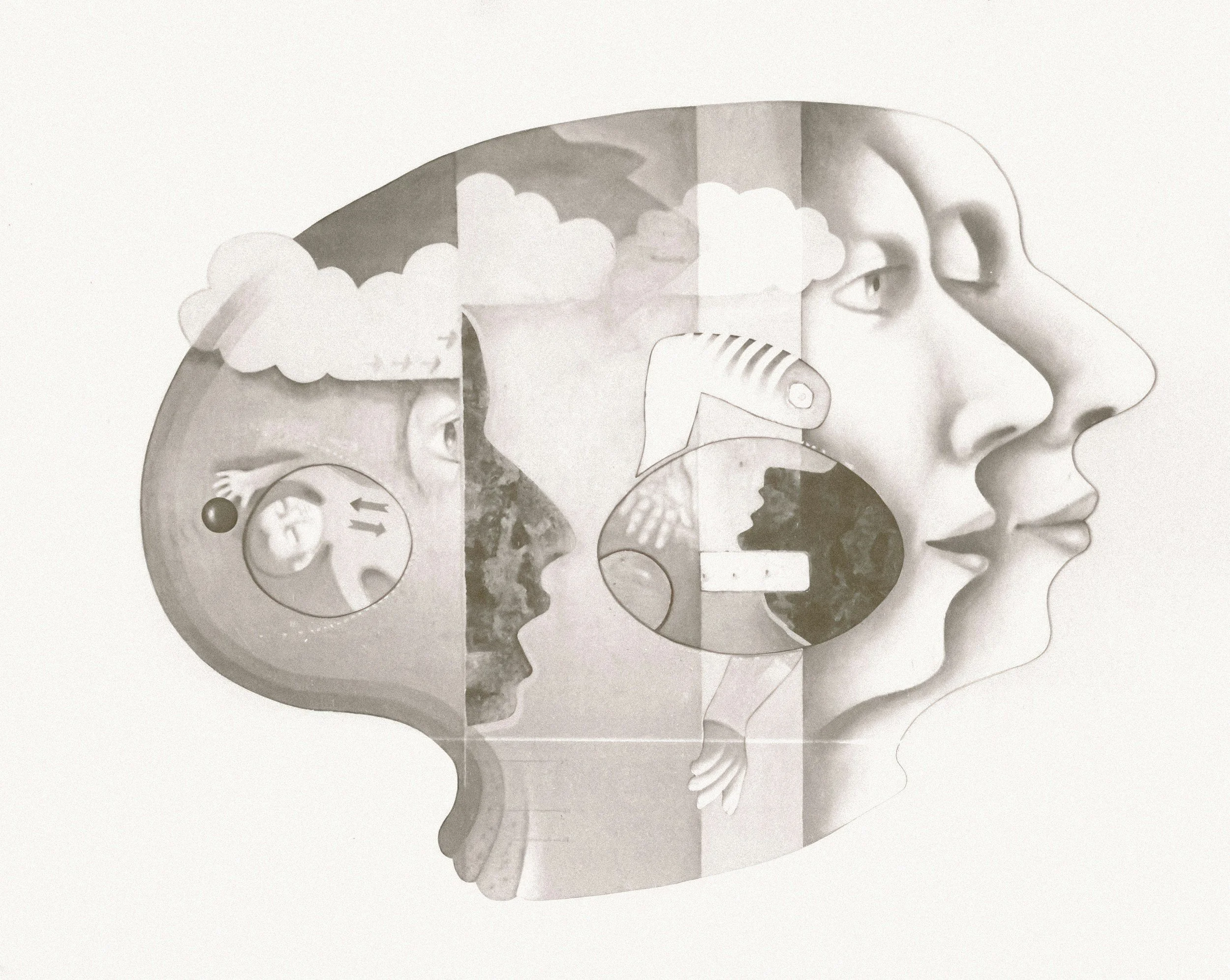
    My memories are scattered. Sometimes they show up as sharp fragments, bloody and jagged, lost pieces of time. Other times, the past grows hazy and slips away when I try to hold on. My mind feels like an abstract painting, and I have no idea who created it.

    I walk alone through Bilbao, the streets uneven beneath me. My Tivas dig into my feet, straps leaving red marks I’ll find later, reminders that I was here.

    Pebbles shift under my steps, tiny echoes of all the pieces I carry inside. Each movement pulls at something old, something I thought I’d left behind.

    The air is thick, smoky, pressing into my lungs. Everywhere I look, there are fragments—shards of things, of people. Blood on metal, heat rising. Even the faces around me seem unfinished, as if everyone is made from scraps. The world outside leaks into the world inside me. Both are scattered, both incomplete.

    I am my own small world. Love, grief, memory—these are the things I hold. Words and air, snowflakes that drift down and melt before I can touch them.

    At first, it’s a party. People bring food, flowers, and booze. They clean, cook, and ask, wanting to know. Books arrive; walks are suggested. They plan the memorial, stay by your side. Like a birthday party, a memorial celebrates a life.

    After the memorial, the world shifts. Friends slip away, returning to their own routines, showing up only on weekends. The phone sits silent. Walks get shorter, then vanish. No more casseroles, no foil-wrapped leftovers waiting in the fridge. Flowers droop, water rings left behind on the counter. 

    How are you doing? People still ask, voices softer, but they don’t wait for the answer. Their words drift back to errands, dinners, the business of living. I stand just outside, watching, unchanged, as if I’m behind glass.

    But my life isn’t there to return to. It’s gone. It won’t come back.

    Who do I cook for now? No one stands beside me at the stove. The kitchen is too quiet. At first, there was only shock. Now the phone is cold, silent, no more silly messages lighting up the screen. I feel everything, then nothing, learning the shape of the empty space. Routine molds me. Outside, life keeps moving, as if nothing happened.

    Then, somehow, things start to look normal again. The world keeps moving, and I watch from the window. Something unsettled lingers in the air. I cry less. I laugh sometimes, but the hollow stays. I listen to a podcast, eat breakfast, try to fill the emptiness with small rituals. This new normal never matches what’s inside me.

    Life keeps going, and so do I. I carry loss and whatever strength I have, step by step.

    Shock and disbelief have faded. I’m not numb anymore. The wounds are hidden under skin, but the ache is still there. My mind clings to blurry, aching pictures.

    Memories. Trees. Babies. So much beautiful food. Love. Hate. Sadness.

    So many memories are fading, breaking down like old photographs left in a drawer. The pictures I used to see clearly now blur together, shifting from sharp color to washed-out black and white.

    I know I’ll remember it all again. Each time I reach for a memory, it changes shape. Nothing stays the same. Every visit shifts the scene—old pictures replaced, blurred by new feelings.

    My friends go out to dinner. They drive to the lake for the day. They eat at home or at someone else’s table. They slip back into their own worlds. Mine is just too fucking quiet.

    I stand still in front of Guernica. My mind keeps circling back to Bilbao, again and again. Maybe I’m trying to find the memories I lost.

    Now, when I look at photos of the Guggenheim Bilbao—whether in my mind or from the times I was really there—I see the building’s soft, flowing lines. I can almost feel the curve, cool and smooth under my hand.

    The tragedies of war never fully disappear. 

  • SAFETY IS AN OBSERVATION

  • Nothing Goes Away

    Now, I’m an instant photograph—an undeveloped Polaroid, seeking light to reveal myself. I’m composed of layers of amnesia—retrograde, antegrade. Pieces of who I am or once was diffuse into the painstaking, slow development of images. I’m not really an amnesiac. I, Michelle Kathleen O’Kane, am a Time Traveler. An object.

    An object in time travels if and only if the difference between its departure and arrival times, as measured in the surrounding world, does not equal the duration of the journey it undergoes. In this place, the soft grey shawl and my knitting project are on my Anthropologie quilted bed. The book on my nightstand is The Echo of Old Books. My notebook, with its pinkish pages, waits patiently for more words—words I will emote before talking incessantly about myself and everything that used to be my life.

    There was a time when everything felt possible. I wrote stories I believed in, and imagined new places and the hope of falling in love.

    Memories of sharing meals with people I loved. Mimosas at brunch. Cosmopolitans before dinner. Vintage chardonnay with dinner. I wake up while driving in various cars, and I’m always the driver. Frequently, I’m on the unpopulated northern lanes of Highway 280, approaching the 92 exchange. Aware. While I’m driving, I surround myself with the color-changing hills. I’m humming along with Elvis Costello. Every day I write the book.

    Now I drive west, heading toward Half Moon Bay. Always in my own car. Today it’s my blue Ford Ranger, the one I bought after my mother died. I was seventeen. She had only been gone a few months.

    I pass the Half Moon Bay Nursery on the north side of 92. I drive through the edges of my town. My ocean, the salt in the air, blue sky, and the sea. White clouds stretch across the sun and water. I realize now how strange I have become.

    I haven’t watched a movie with anyone in more than five years. I haven’t laughed with someone in just as long. Sometimes, something on TV or the radio pulls a laugh out of me—a quick, sharp sound. It surprises me. I hardly recognize it as my own.

    Time is on my side. Gravity nudges me across cool, damp grass. Behind me, a 5’4” wide trail marks where I’ve rolled down the hill.

    I’m jealous of many of the things I see on TV. And Instagram. Landscapes and cities and people at tables with white espresso cups.

    “You don’t look back along time but down through it, like water. Sometimes this comes to the surface, sometimes that, sometimes nothing. Nothing goes away.”—Margaret Atwood

  • Knitting, Purling & Amnesia

  • Amnesia & Time Travels

    Guernica

    Amnesiac Adventuress

    My memories are scattered. Sometimes they show up as sharp fragments, bloody and jagged, lost pieces of time. Other times, the past grows hazy and slips away when I try to hold on. My mind feels like an abstract painting, and I have no idea who created it.

    I walk the uneven streets of Bilbao, alone, my feet pressed into stiff Tivas, the straps biting at my skin.

    Pebbles shift under each step, small reminders of all the scattered pieces I carry. Every movement tugs at something old.

    The air is dirty, smoky, heavy in my lungs. I see fragments everywhere—bits of things, bits of people. Blood on hot metal. Even the people look raw, as if they’re made of broken pieces. The world outside blurs into the world inside me. Both are scattered, both unfinished.

    I am my own small world—love, grief, memories. Words and air. Snowflakes drifting, melting before I can catch them.

    At first, it’s a party. People bring food, flowers, and booze. They clean, cook, and ask, wanting to know. Books arrive; walks are suggested. They plan the memorial, stay by your side. Like a birthday party, a memorial celebrates a life.

    After the memorial, everything changes. Friends drift back to their own lives, visiting only on weekends. The phone grows quiet. Walks shrink, then stop. No more casseroles, no more foil-wrapped dishes in the fridge. Flowers wilt, water stains the counter. Like snowflakes, like people, flowers disappear.

    How are you doing? People still ask, voices soft but quicker now. Their words turn back to errands, to dinners, to the living. I stand just outside, watching, unchanged.

    But my life isn’t there to return to. It’s gone. It won’t come back.

    Who do I cook for now? Who stands beside me at the stove? How do I comfort anyone? The world feels empty. At first, only shock. Now the phone is cold, silent. No more silly messages. I feel everything, then nothing, as I get used to the empty space. Routine shapes me. Outside, life keeps moving.

    Then, somehow, things start to look normal. The world moves on, and I watch it. Something unsettled hangs in the air. I cry less. I laugh, but the hollow stays. I listen to a podcast, eat breakfast, try to fill the emptiness with small routines. This new normal never fits what’s inside me.

    Life keeps going, and so do I. I carry loss and whatever strength I have, step by step.

    Shock and disbelief have faded away. I’m not numb now. The wounds are hidden, but pain sits underneath. My mind holds onto blurry, aching pictures.

    Memories. Trees. Babies. So much beautiful food. Love. Hate. Sadness.

    So many memories are fading, breaking down like old photographs from another century. The pictures I used to see so clearly now blur together, shifting from sharp to washed-out black and white.

    I know I’ll remember it all again. Each time I reach for a memory, it changes shape. Nothing stays the same. Every visit shifts the scene—old pictures replaced, blurred by new feelings.

    My friends go out to dinner. They drive to the lake for the day. They eat at home, or at someone else’s table. They slip back into their own worlds. Mine is just too fucking quiet.

    I stand still in front of Guernica. My mind keeps circling back to Bilbao, again and again. Maybe I’m trying to find the memories I lost.

    Now, when I look at photos of the Guggenheim Bilbao—whether in my mind or from the times I was really there—I see the building’s soft, flowing lines. I can almost feel the curve, cool and smooth under my hand.

    The tragedies of war never fully disappear. 

    A woman holds a smiling child by a chain-link fence, looking at several grazing horses in a sunlit pasture with trees in the background.
    A woman holds a smiling child by a chain-link fence, looking at several grazing horses in a sunlit pasture with trees in the background.
  • DAWN


    Dawn

    I was born.
    I saw a few things.
    I wrote some of it down.

    I lived for a little while, as we all do,
    and I will die, as we all will.

    I’m happy that I came out of
    nonexistence
    and saw the sun
    before I go back.

    Birthday

    came out of the bookstore onto carson by comma coffee.
    had an old paris review. cost me $5.50. not bad.
    some paintings by woody guthrie were on the cover.
    i couldn't read it. i was too crazy.

    the guys in the bookshop were laid back and friendly. we'd talked a little.
    the kid'd been sorting books, pulling them out of boxes.
    he asked the older one who isadora duncan was. there was an old autobiography.
    the old guy said he couldnt remember. "she'll know," referring to me.
    i dont know why he said it,
    but he was right, so i told them who she was.
    then i went out and walked. i had to hurry.
    i had to tell everybody the big news.
    i felt mad with it.

    i stopped outside a restaurant. people were eating on the patio.
    good a place as any.
    i had to tell everybody about my baby.
    to tell the truth, i was kind of dizzy. too much excitement all at once.
    out of the blue, so to speak.
    i felt like my whole body was vibrating. sizzling. i was infused with light.
    i looked at the people. i looked at their plates. i looked at their decanters of wine.
    they were just stuffing their faces and staring at their phones.
    i had to wake them before they faded into nothing, there wasnt much time left for them.
    they were killing themselves with gluten and sulfites. the phones were frying their eyeballs. they sat there talking too much and saying nothing.

    well, i was gonna talk
    and i was gonna say something.
    i was gonna scream it at them.
    and just like that i did.